
Home > KMC Blog index > Current article

Transport accessibility Summit
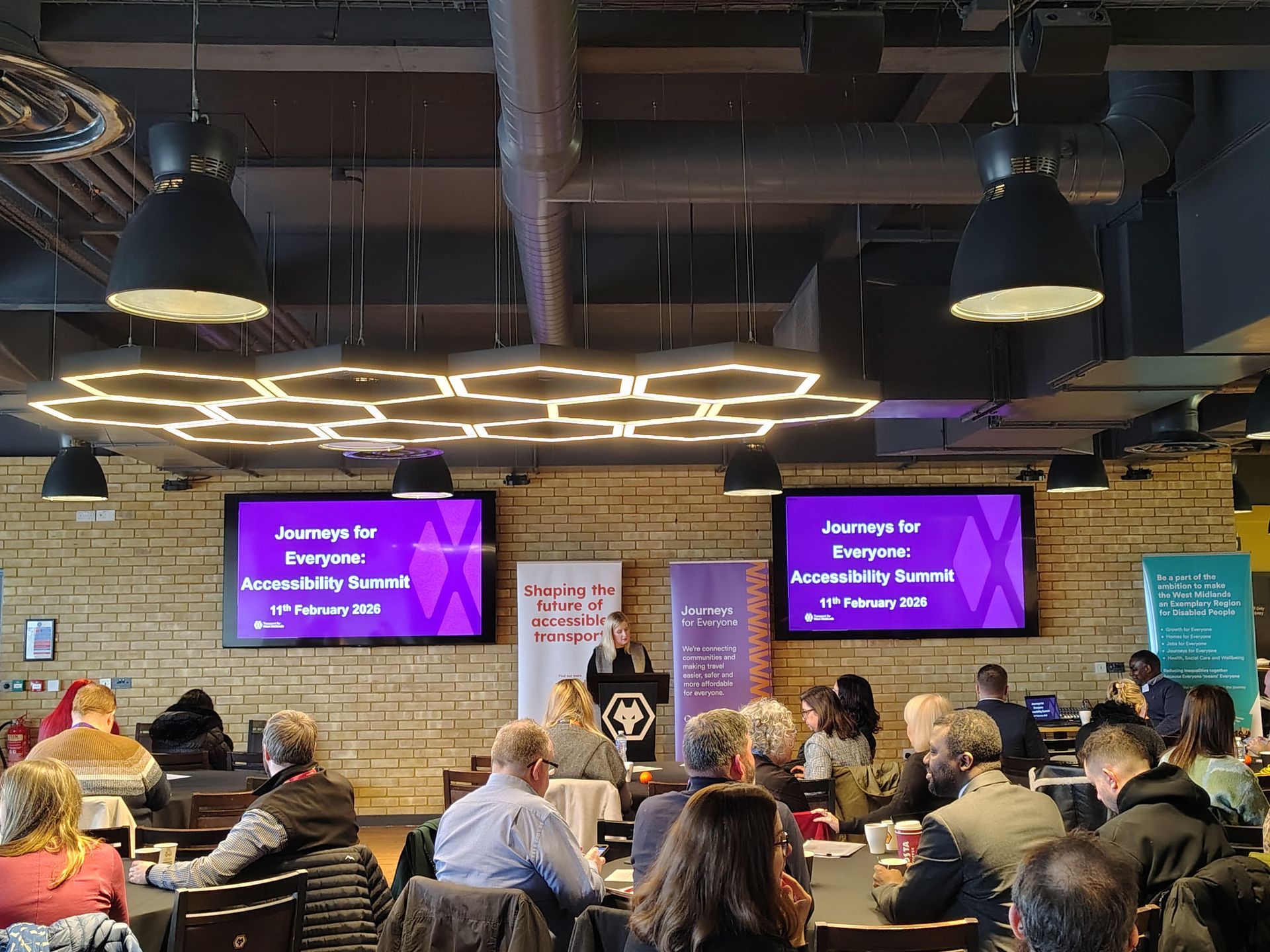
A special summit in Wolverhampton was held to support the development of a connected and sustainable public transport system for people with disabilities and specific difficulties.
The event, “Journeys for Everyone”, organised by the West Midlands Combined Authority and Transport for West Midlands, is part of the West Midlands Mayor’s inclusive strategy. It took place in the Stan Cullis Suite at Molineux Stadium, home of Wolverhampton Wanderers Football Club.
The event combined presentations, panel discussions and workshops. It was hosted by Louise Connop from the Thomas Pocklington Trust and Senior Development Manager at the Sight Loss Councils.
She emphasised that everybody is different, with varying needs and adjustments, and highlighted the importance of working together collaboratively.
Sandeep Shingadia made one of his first major appearances as the new Executive Director at Transport for West Midlands, delivering the welcome speech.
He spoke about the importance of delivering “Journeys for Everyone”, making the region the best place to work and visit, and ensuring people can travel with confidence.
He also outlined several transport achievements and future plans, including bus franchising in the West Midlands, safer travel initiatives, and the Skills Academy.
He concluded that accessibility is not an addition, but a fundamental requirement for success in creating a fairer and more inclusive society.
Emma Cartlow from the National Centre for Accessible Transport (NCAT) presented examples of accessibility barriers and the changes needed to make meaningful progress. She highlighted the importance of enabling passengers to travel with dignity and removing barriers throughout the transport system.
Emma also discussed the organisation’s development over its first three years and outlined future plans, including co-producing a toolkit that can be widely adopted, strengthening relationships, and improving education and training for transport professionals.
Sammy Amead, Youth Officer at Deaf World, addressed the challenges faced by deaf people when using transport, as well as future developments. These included ideas such as a digital app to support learning for deaf drivers.
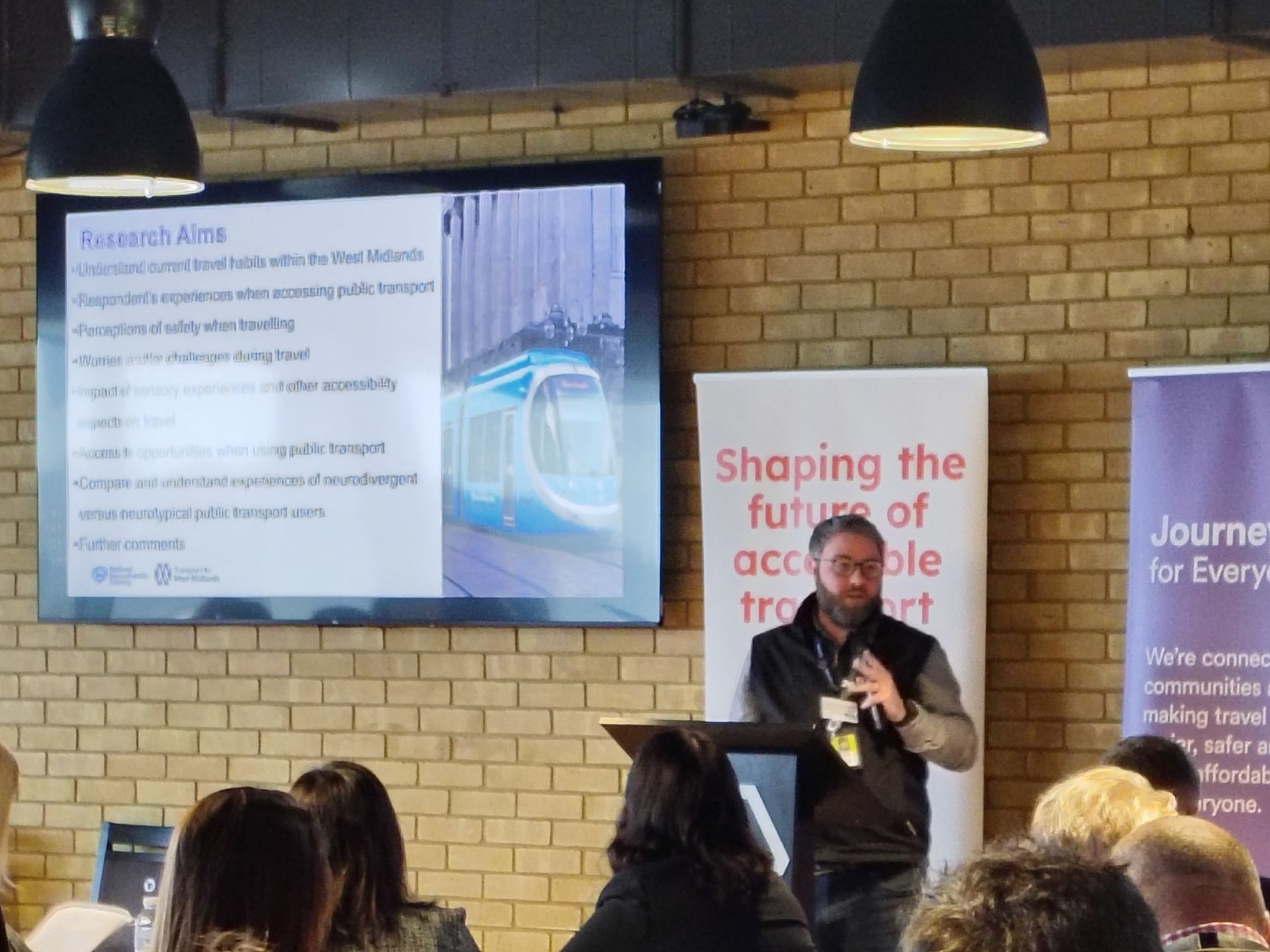
Michael Sandland, Operations Manager for Transport Safety Officers at Transport for West Midlands, presented initiatives undertaken by his team, including National Neurodiversity Training. Findings showed that barriers are more significant on the bus network than on other modes of transport, while tram passengers tend to feel more confident.
However, he acknowledged this could change with the removal of conductors and the introduction of revenue inspectors, as passengers are now required to purchase tickets at machines before boarding trams.
I was also part of a recent initiative involving several developments with Transport for West Midlands and National Neurodiversity Training.
To find out more, please visit the article links below.
The event continued with a panel discussion featuring lived experiences. Panellists included Alistair Crisp from the Walk Wheel Cycle Trust, Paul Hopkins (Advocate and Sight Loss Councils member), and Alexandra Davis, disability advocate and YouTube influencer.
All panellists shared their experiences of barriers, discussed which transport modes are most accessible, explored how systems work well (or not), and reflected on physical barriers, perceptions, and what changes they would make if given the opportunity.
Examples raised included difficulties with journey planning, issues with contactless payments, and hazards such as tripping or navigating around parked cars on pavements. Some also shared experiences of being stranded in the dark due to cancellations or delays, leading to missed connections and further challenges, particularly when using buses.
The discussion concluded with several key points: the need to address pavement parking, improve accessibility engagement by transport authorities, and build greater empathy. Collaboration and commitment were emphasised as essential. It was also noted that no two individuals have the same experience, so it is important to consider all disabilities, not just those affecting wheelchair users.
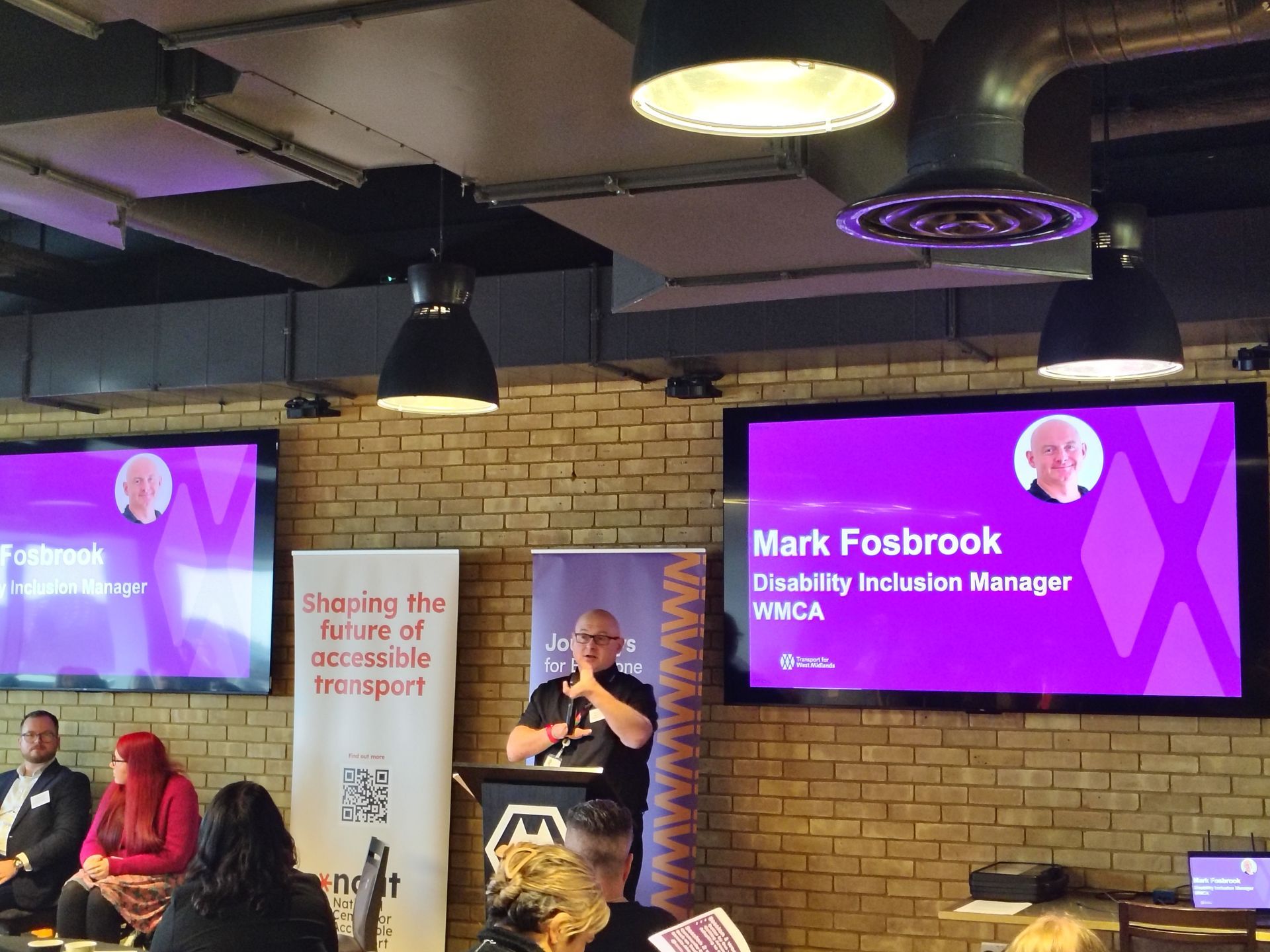
Mark Fostbrook, Disability Inclusive Manager at the West Midlands Combined Authority, presented examples of the team’s strategy to make the region more inclusive for disabled people.
He stressed the need for a collective approach to progress, recognising that change cannot happen in isolation. He acknowledged that while there is still a long way to go, this event marked an important step towards improving accessibility across all modes of transport.
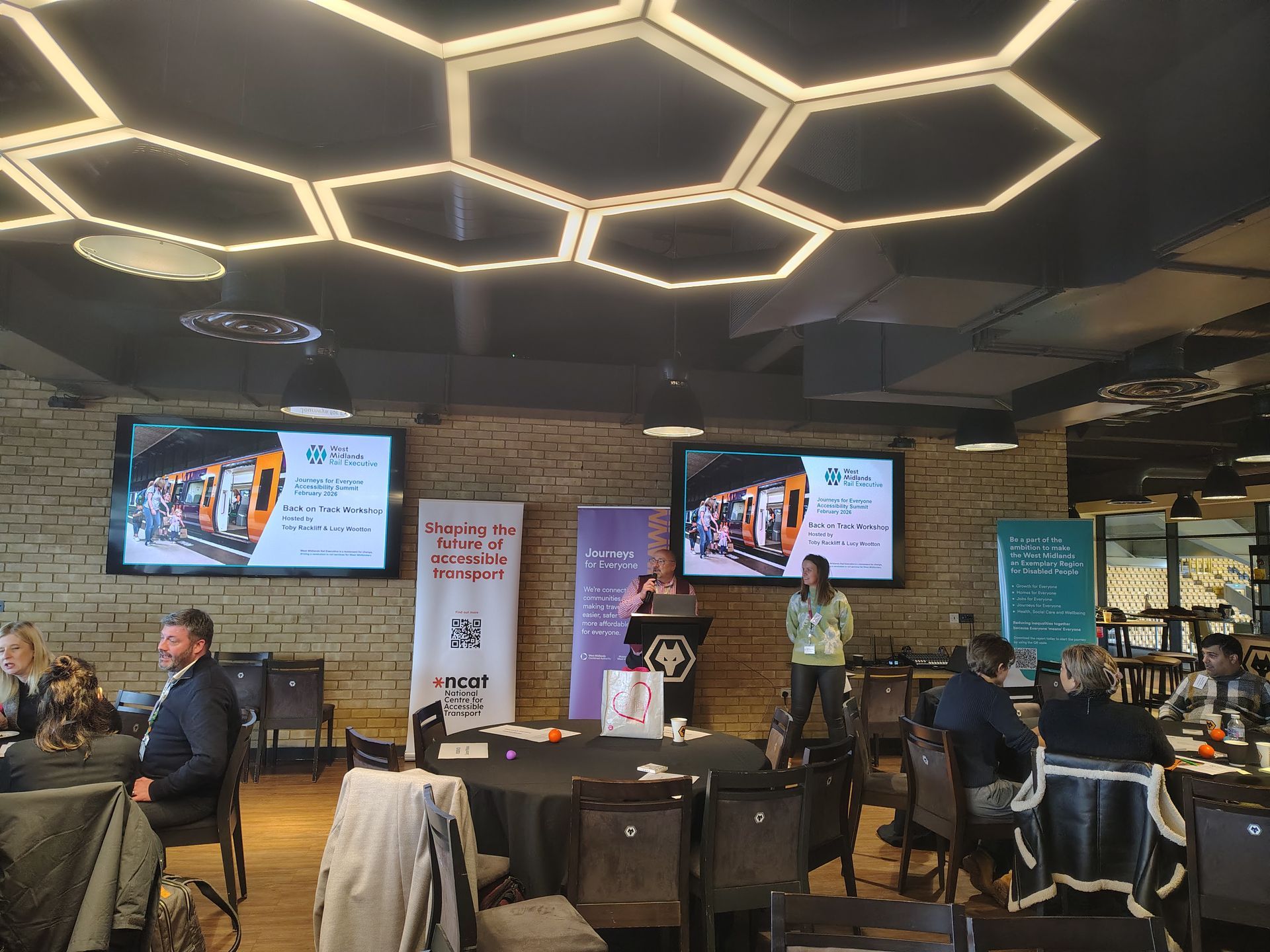
The second half of the summit featured two interactive workshops.
The first focused on plans to develop a bus franchising system for the West Midlands, similar to those in London and Greater Manchester. Participants were asked to identify what currently works, what does not, and to map different stages of a journey.
I asked a question about design specifications, referencing a similar scheme in West Yorkshire, where a prototype bus design had been criticised for not adequately considering local passenger needs (including not considering the introduction of a London-style two-door bus with a centre exit.)
In response, organisers stated that they would ensure meaningful engagement and participation to develop designs that are appropriate and relevant for local passengers.
The second workshop, led by the West Midlands Rail Executive, followed a similar format.
Afterwards, I spoke about my concerns with representatives from the West Midlands Rail Executive and West Midlands Trains, including Head of Accessibility James Foxtall, regarding the future of the region’s rail network as it moves towards public control under Great British Railways.
I shared my experience as a passenger, outlining how the network previously operated as a more integrated system before becoming divided into a two-tier structure during privatisation. I noted that this has led to a perceived reduction in peak-time passenger numbers.
I also raised concerns about how future changes could affect integration with Transport for West Midlands. I was advised to contact the Department for Transport, particularly the Transport Secretary, to share my concerns and offer insights as a neurodivergent passenger, along with potential solutions for the region and beyond.
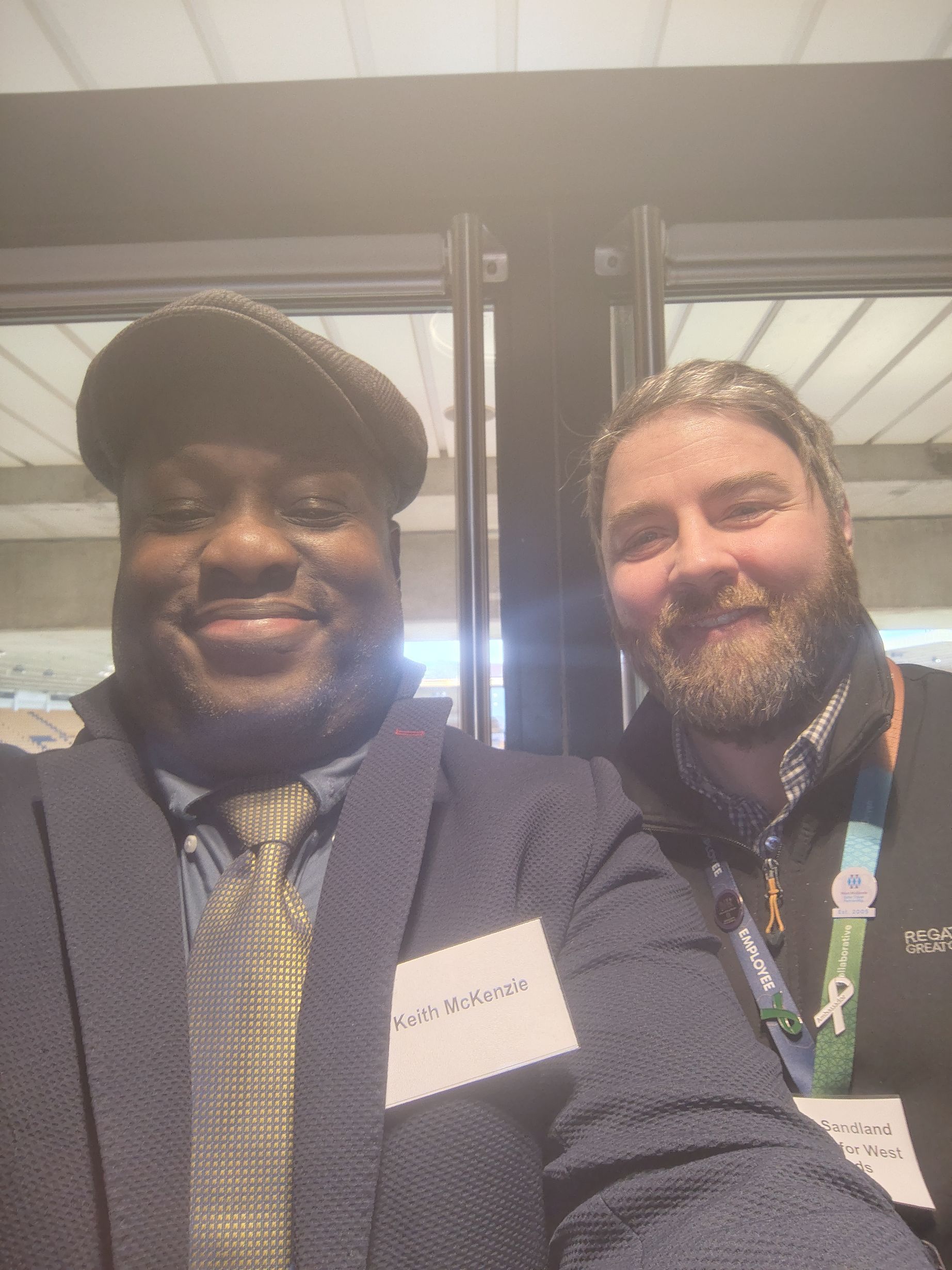
Posing with Michael Sandland, Operations Manager for Transport Safety Officers at Transport for West Midlands
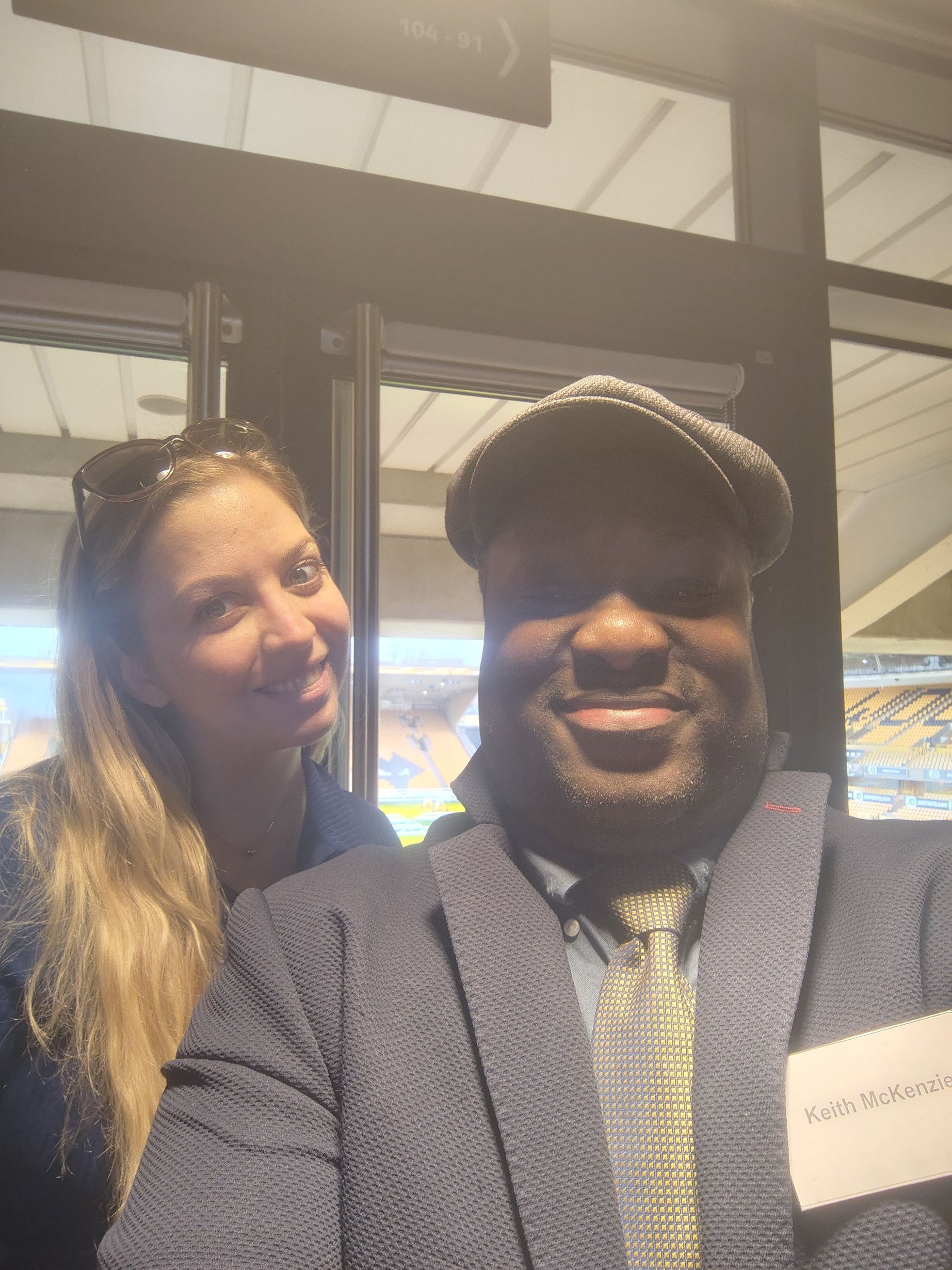
Posing with Daisy Chapman-Chamberlain (Rail Services Lead at the Rail North Partnership)
During the event, I also spoke with representatives from various organisations, including Patrick Power from Network Rail, Daisy Chapman-Chamberlain (Rail Services Lead at the Rail North Partnership), Rebecca Miller (Director of Bus Users UK), and Kwabena Osyande, Equalities and Diversity Manager at the West Midlands Combined Authority.
This summit was an important step in gaining insight from both passengers and transport professionals. It marks the beginning of stronger collaboration, better connections, and positive solutions for a more inclusive transport system for everyone.
This article is linked with specific development categories:
Active & Participation


Notice to editors
Keith Mckenzie
Keith is an awareness campaigner, a creative designer (Graphic design and digital art) and a salsa dancing participant
With a background in Art & Design (including Graphic Design & Digital art) and a participant in music-related film documentaries, events & record label project King Of the Beats including filming and behind the scene preparations.
Keith was educated at Hereford College of the Arts, the University of Northampton, Birmingham City University and Google's Digital Garage. Since 2000 , he has developed over twenty years in providing awareness projects, campaigns and activities with the Awareness brand Plus Value Awareness along with Differences Originals. Also am involved with salsa classes in the local community
as an assistant. I also have participated in major dancing conventions in Birmingham's, including Motion City (created by Birmingham Latinmotion and London's ManboCity) during the summer and Latinmotion's NYE Fest during the New Year public holiday.
In 2022. Keith became a featured community participant for Birmingham who became part of special projects and campaigns to promote a positive legacy beyond hosting the Commonwealth Games




Follow me on Social media
