
Home > KMC Blog index > Current article

My dancing barriers by perception


Through my personal experences and perspectives, some examples of how barriers and challenge occurs when dancing envionments are not inclsuive or accomodating
Since the global pandemic, I have repeatedly observed (and personally experienced) a noticeable rise in impatience and intolerance across Latin dance environments. What should be spaces of connection and expression are, at times, becoming
spaces where people are judged too quickly and supported too little.
At the heart of this issue is perception.
Perception
Perception creates barriers. It shapes expectations (often unrealistic ones) placed on dancers who face specific challenges. If a dancer does not appear confident at all times, and does not mask how their difficulties affect their learning or social dancing, they risk being sidelined, excluded, and made to feel as though they do not belong.
This is not a rare occurrence. It has been a consistent reality for me over the past fours years since returning to dance after the pandemic.
Because of this, I have had to put strict personal boundaries in place, not to limit myself, but to protect my ability to participate at all.
For example, apart from a few exceptions I no longer attend classes during party events or evening sessions at conventions. This is not a casual choice, it is a response to repeated negative experiences. In fast-paced or non-accommodating classes, I have been subjected to verbal ableist insults. One particularly difficult incident occurred on New Year’s Eve. When I reported the discrimination, the teachers present dismissed it, claiming they had not noticed anything.
The side-effects after classes
The impact did not end in the classes. It carried into the social space. I was left feeling discredited, alienated, and marginalised. In an environment where men are typically expected to invite women to dance, I faced repeated rejection. I was socially sidelined, unable to engage, and ultimately forced to leave the event early.
This pattern has repeated itself too many times, including during what should be celebratory occasions. As a result, I now avoid these settings altogether. But this comes at a cost: I miss out on opportunities to connect with others naturally, without the added pressure that social dance environments often bring.
Attitudes during classes when challenging
The difficulties I live with has often misinterpreted as a lack of effort or dismissed as “lack of confidence”. As a result, dancers (including those with additional challenges) may be unfairly labelled as a liability and made to feel invisible or unwelcome.
This is something I have personally experienced. While attending a three-hour dance workshop, I was only able to participate for two hours. Afterwards, I felt socially alienated by other attendees once the workshop had ended. One individual,
who had noticed that I was struggling, appeared to take advantage of the situation by deliberately attempting to marginalise me socially. For example, they would engage briefly with someone I was speaking to and then lead them away within moments of the conversation beginning.
Being selective
I have also had to become highly selective about the classes and workshops I attend. The attitude and teaching style of the instructor matters greatly. Without patience and adaptability, the environment can quickly become unwelcoming.
Elsewhere in the article I have explined how I have been made to feel like a burden, particularly when others perceive that my learning pace affects them. This has led to hostility, disrespect, and the need to withdraw from classes.
Yet even that decision is judged, leaving classes to manage my learning or well-being is often misinterpreted as a lack of effort or confidence. These assumptions follow me into social dancing, where I have experienced rejection based not on reality, but on perception.
The result is a familiar and isolating scene: standing alone near the dance floor, discouraged, feeling like an outsider in a space where I should feel included.
At a recent event, I made the difficult decision to significantly reduce my participation. I chose not to stay overnight, as prolonged isolation only intensified the social challenges I was already facing. I also avoided the New Year’s Eve party entirely (despite the fact that I continued to attend the event but outside the New Year's eve party) .
The scale of the crowd and the lack of patience in that environment had previously left me feeling so excluded that stepping away became the healthier choice.
This was not about giving up. It was about choosing self-respect over silent endurance. My well-being and self-worth must come first, even if that means missing out.
Judge & Jury disrespect
Another major barrier within dance spaces is the tendency towards quick judgement and perfection-driven expectations. I have experienced this directly. On one occasion, a dance partner criticised my leading when, in reality, they were not following correctly. At a later event, the same individual ignored me entirely while socialising with a mutual friend, subtly but clearly reinforcing exclusion.
Even seemingly small actions can have a significant impact. For instance, when classes are filmed, it disrupts how I learn. At times, I need to step away. When I try to explain this briefly and respectfully, it is not always met with understanding. On one occasion, I was spoken to in a patronising and hostile manner, as though I were a child. I left the class immediately, deeply upset.
What makes these situations more difficult is the lack of opportunity to correct misunderstandings. When I step away, others often fill the gap with assumptions which can lead to further exclusion and marginalisation.
What needs to change
The dance community must move away from “judge and jury” attitudes. Quick assumptions and surface-level perceptions cause real harm. Misunderstanding how a person copes and manages their behaviour is never a justification for disrespect.
See the person beyond your initial perception (ask rather than judge). Become more supportive and encouraging, and reach out across social divisions. These are just some of the factors the dance community needs to consider; otherwise, we risk losing a vibrant dancing environment. A connected and respectful dancing environment is far more sensible than a divisive “them and us” mindset.
It’s time for everyone to start making a positive change, no excuses.
Useful Links

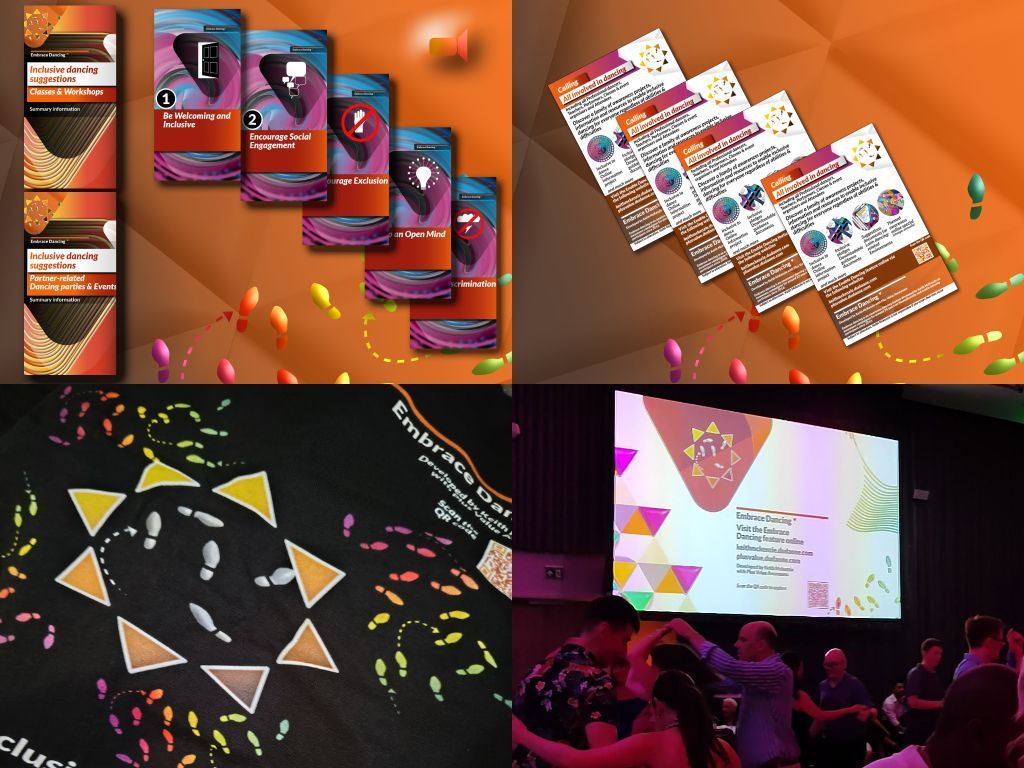
Embrace Dancing
The online special is available all year round with links to dancing-related projects, information and publications.
Visit the Embrace Dancing feature below
Also available on the Plus Value Awareness Website
Embrace Dancing is developed by with Keith Mckenzie with Plus Value Awareness
Notice to editors
Keith Mckenzie
Keith is an awareness campaigner, a creative designer (Graphic design and digital art) and a salsa dancing participant
With a background in Art & Design (including Graphic Design & Digital art) and a participant in music-related film documentaries, events & record label project King Of the Beats including filming and behind the scene preparations.
Keith was educated at Hereford College of the Arts, the University of Northampton, Birmingham City University and Google's Digital Garage. Since 2000, he has developed over twenty years in providing awareness projects, campaigns and activities with the Awareness brand Plus Value Awareness along with Differences Originals. Also are involved with salsa classes in the local community as an assistant. Also have participated in major dancing conventions twice a year at Birmingham's NEC for Birmingham Latinmotion and London's ManboCity.
In 2022, Keith become a featured community participant for Birmingham who became part of special projects and campaigns to promote a positive legacy beyond hosting the commonwealth games
Plus Value Awareness
The Plus Value awareness initiative is a family of projects, information & campaigns about challenges understanding and awareness for people with invisible difficulties, to see a more human rather than medical aspects and to promote and to educate a better sense of value. Eventually to develop this awareness initiative to provide in the future potential services, products and social mission activities as part of the umbrella identity Aware+Vision
Hidden differences are used to describe independent people which live with specific neurological difficulties or Anxiety which is not noticed. This is associated with moderate or mild psychological and learning-related conditions (including a mild form of autism through to, Dyslexia, Dyspraxia, ADHD & Social Anxiety).
© Copyright Keith Mckenzie




Follow me on Social media
