


Through my personal experences and perspective how I navigate the dancing envionments as a neurodivergent latin dancer
Dance can be a powerful source of fulfilment. It brings energy, connection, and a sense of achievement. But when learning and social dancing go beyond what is manageable, the experience can quickly become overwhelming, with very real negative consequences.
Through my own experiences, I’ve come to recognise something important: many dancers simply do not see (or fully understand) the challenges that people like me face. Nor do they always recognise the expectations placed on me or other dancers with neurodiversity, invisible disabilities or with anxiety in learning environments and on the social dance floor.
My Examples of Steps
This blog sets out the practical steps I take to protect both my progress and my presence in dance spaces.
1. Knowing when a space is right and when it isn’t
Every class or workshop is a risk. There is no guarantee of patience, understanding, or accommodation for different abilities. I have had to become highly aware of which environments allow me to learn authentically and which may harm my well-being or reputation. I also set firm boundaries: if my well-being is compromised, I leave. Protecting myself is not optional, it is necessary.
2. Treating learning as a disciplined process
Improvement does not end when the class finishes. I rely on structured routines, including detailed note-taking on digital devices. Without this, even reviewing video recordings becomes less effective, and applying what I’ve learned in social settings becomes significantly harder.
3. Building a usable dance framework
I don’t just learn individual moves, I construct a “family” of patterns from class material and recordings. This allows me to adapt, recall, and respond more effectively in real dance situations, rather than feeling lost or reactive.
4. The importance of detail and the risks of missing it
As a visual learner, precision matters. I need to understand exactly how movements work. Without that clarity, I cannot safely or confidently expand my dancing. The consequences are real: mistakes can lead not only to embarrassment, but also to accidents with partners and damage to my credibility. Fast-paced teaching or a lack of detailed breakdowns can make this significantly harder.
5. The hidden pressure of social dancing
Social events are not as simple as they appear. It takes time for me to feel ready to dance. There is also an unspoken expectation (particularly for male leaders) to demonstrate variety and confidence. Starting too soon, without enough preparation, risks being judged as limited or unengaging. That perception can be difficult to undo.
6. The unseen work behind participation
What others may see as a hobby requires extensive preparation for me. I practise alone, review notes and recordings, and reflect on my social interactions. Without this effort, I risk exclusion, negative judgement, and the visible effects of anxiety. Preparation is not about perfection, it is about being able to participate at all.
But this raises a bigger issue.
The burden of navigating these challenges should not fall solely on dancers like me, nor on others with neurodiversity, invisible disabilities, or anxiety.
A healthy dance environment is a shared responsibility.
Teachers, assistants, and organisers must create spaces that are genuinely inclusive through clear instruction, patience, and flexibility. Fellow dancers also play a role. Support should not stop at the end of a class, it should continue through encouragement, practice, and connection beyond it.
A dance class is not a competition, It is a community. In any real community, people look out for one another.
This means:
Making sure no one is left behind
Offering help without judgement
Avoiding behaviour that creates pressure, exclusion, or discomfort
It also means challenging harmful behaviour.
Disrespectful or ableist remarks should never be ignored. Likewise, patronising phrases like “just rise above it” do not help, they dismiss real challenges and can cause lasting harm.
If dance spaces are to grow, they must evolve.
Inclusivity is not optional. It is not something reserved for the majority. Even if dancers with additional needs are in the minority, their experience matters just as much. Every dancer deserves to feel valued, supported, and able to participate fully.
Because at its best, dance is not just about movement.
It is about connection, understanding, and making space for everyone on the floor.
Useful links
Embrace Dancing
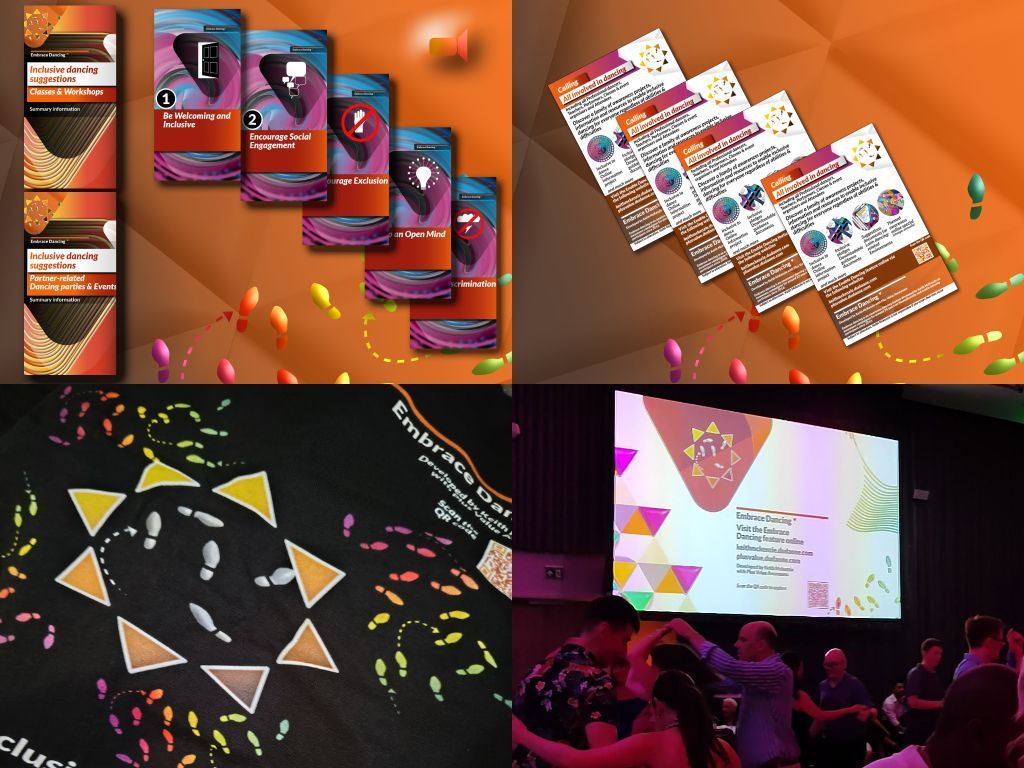
The online special is available all year round with links to dancing-related projects, information and publications.
Visit the Embrace Dancing feature below
Also available on the Plus Value Awareness Website
Embrace Dancing is developed by with Keith Mckenzie with Plus Value Awareness
Notice to Editors
Keith Mckenzie
Keith is an awareness campaigner, a creative designer (Graphic design and digital art) and a salsa dancing participant
With a background in Art & Design (including Graphic Design & Digital art) and a participant in music-related film documentaries, events & record label project King Of the Beats including filming and behind the scene preparations.
Keith was educated at Hereford College of the Arts, the University of Northampton, Birmingham City University and Google's Digital Garage. Since 2000, he has developed over twenty years in providing awareness projects, campaigns and activities with the Awareness brand Plus Value Awareness along with Differences Originals. Also are involved with salsa classes in the local community as an assistant. Also have participated in major dancing conventions twice a year at Birmingham's NEC for Birmingham Latinmotion and London's ManboCity.
In 2022, Keith become a featured community participant for Birmingham who became part of special projects and campaigns to promote a positive legacy beyond hosting the commonwealth games
Plus Value Awareness
The Plus Value awareness initiative is a family of projects, information & campaigns about challenges understanding and awareness for people with invisible difficulties, to see a more human rather than medical aspects and to promote and to educate a better sense of value. Eventually to develop this awareness initiative to provide in the future potential services, products and social mission activities as part of the umbrella identity Aware+Vision
Hidden differences are used to describe independent people which live with specific neurological difficulties or Anxiety which is not noticed. This is associated with moderate or mild psychological and learning-related conditions (including a mild form of autism through to, Dyslexia, Dyspraxia, ADHD & Social Anxiety).
© Copyright Keith Mckenzie




Follow me on Social media
